After Byron . . . Our Beach Clubs
Shoreline owner before today’s MBBP and MB Club …
Oliver Byron is a hard act to follow. In addition to being hailed as a “pioneer actor on the American stage,” he had a keen eye for local beachfront property. Even 120 years ago. While largely regarded as a Long Branch worthy, historically speaking, I’m finding more evidence from the Long Branch Daily Record digital archives on his key role in early Monmouth Beach development.
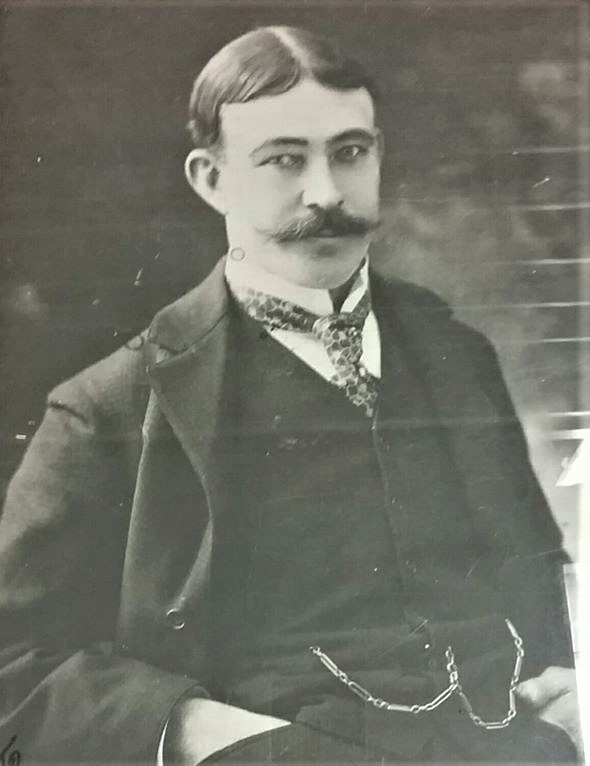
Oliver Byron, 1842
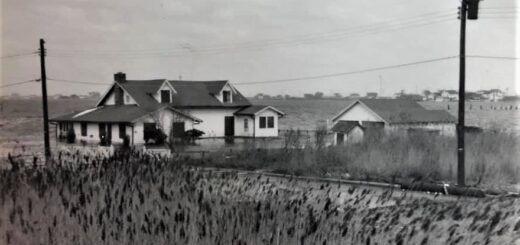
The seashore land where today’s Monmouth Beach Bathing Pavilion rests was once owned by the famous actor. There he built a massive cottage called “Surfside” that burned to the ground in May 1903. FYI — Byron had rejected a summer rental offer of $1,800 ($65,000+ today) the day before the blaze. In 1918, the borough acquired the Ocean Avenue property and by Summer 1921 a new MBBP was opened. Locals have maintained a deep affinity for their municipal beach club; over a century later it thrives.
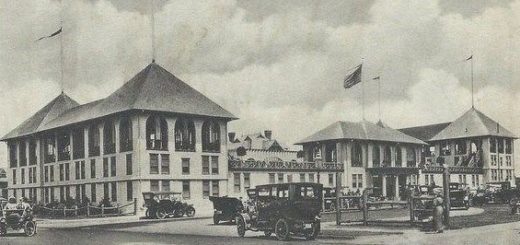
Adding to the story’s pluck, the Ocean Avenue property where the Monmouth Beach Club would rise was also owned by Oliver Byron. In Fall 1909, the Monmouth Beach Association — the ritzy group that founded the exclusive village in 1871 — seeking to expand its offerings (beyond fine dining, luxury rooms, golf/tennis, music, and sea breezes) bought his property. In July 1910, the group opened its selective “Baths” beach and pool club. Privately owned since 1947, the Monmouth Beach Bath & Tennis Club has lasted for 75+ grand summers and still operates today.
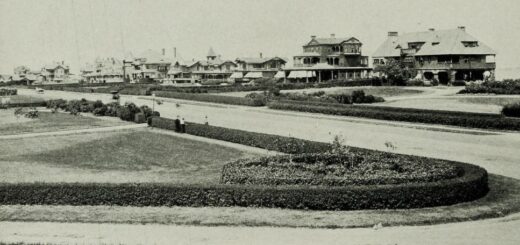
Thus, newspaper accounts are that Oliver Byron had owned the land east of Ocean Avenue where both of today’s beach clubs were spawned and still prosper — one private, one public. It’s a neat mix. The location is arguably the most prime piece of property in the entire town. Between the two beach clubs is territory now held by two imposing oceanfront high-rise condominiums: “The Admiralty” and “The Shores.”
A poplar and active Gilded Age showman, Byron toured the nation for decades as both performer and playwright — but spent “48 consecutive summers” in Long Branch; where he died in October 1920.
More Info:
• More on Oliver Byron — HERE
• MBBP History — HERE
• MB Club History — HERE
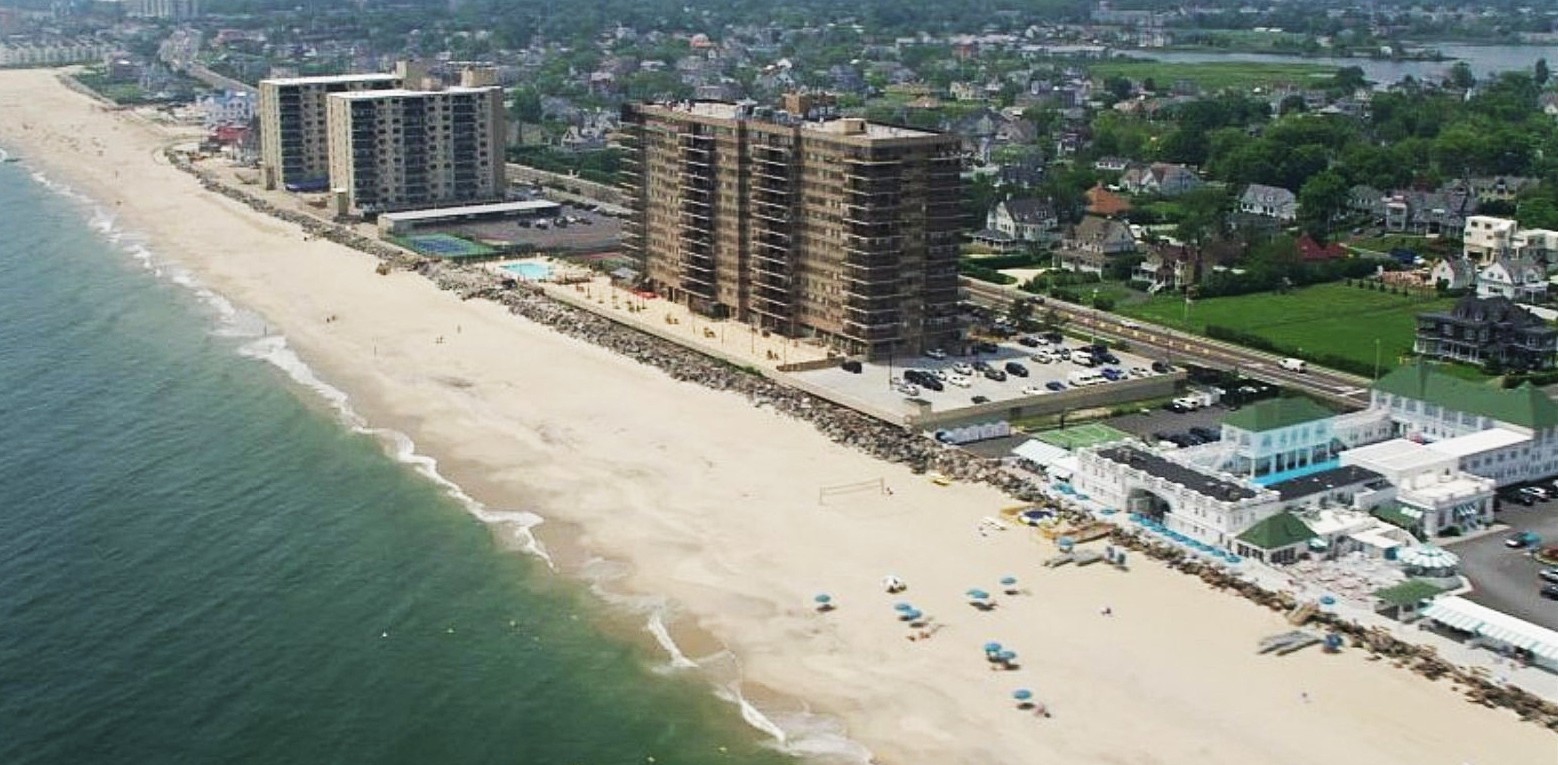
Monmouth Beach coastline between the two beach clubs, 2016.
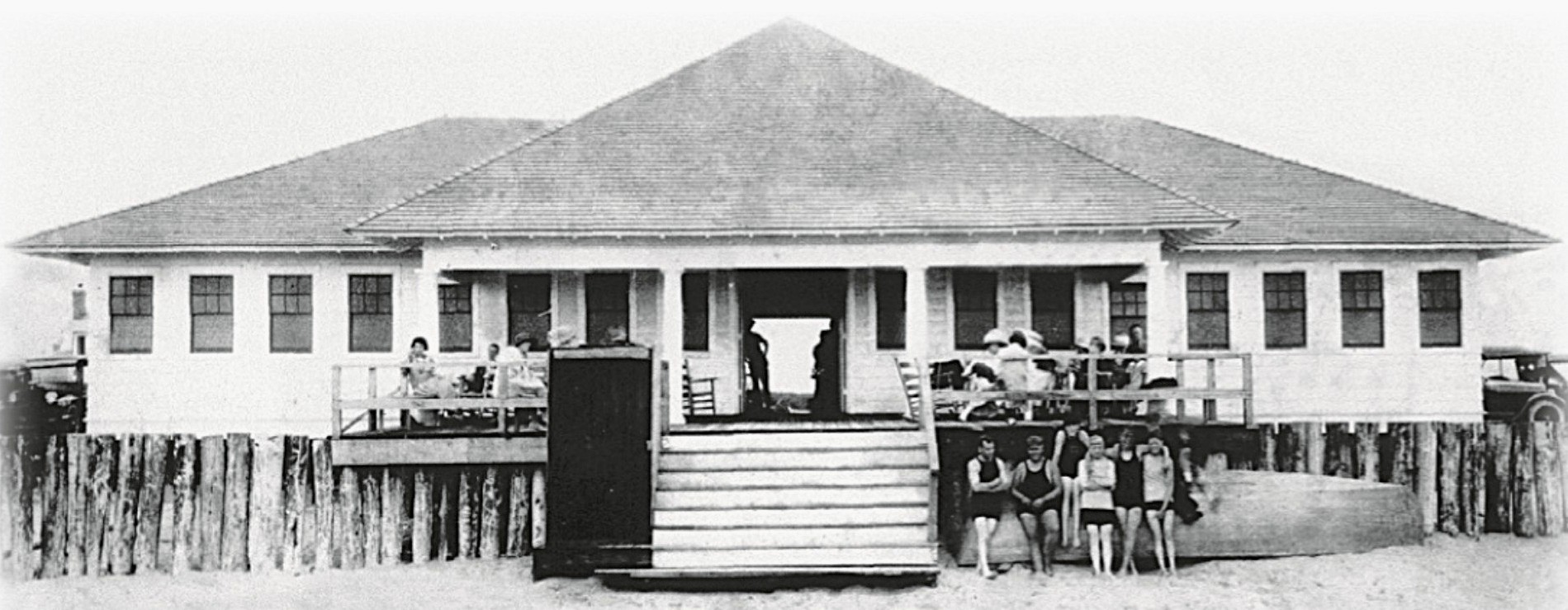
Original MBBP on Ocean Avenue, 1930s. It was wrecked during a vicious March 1962 storm.
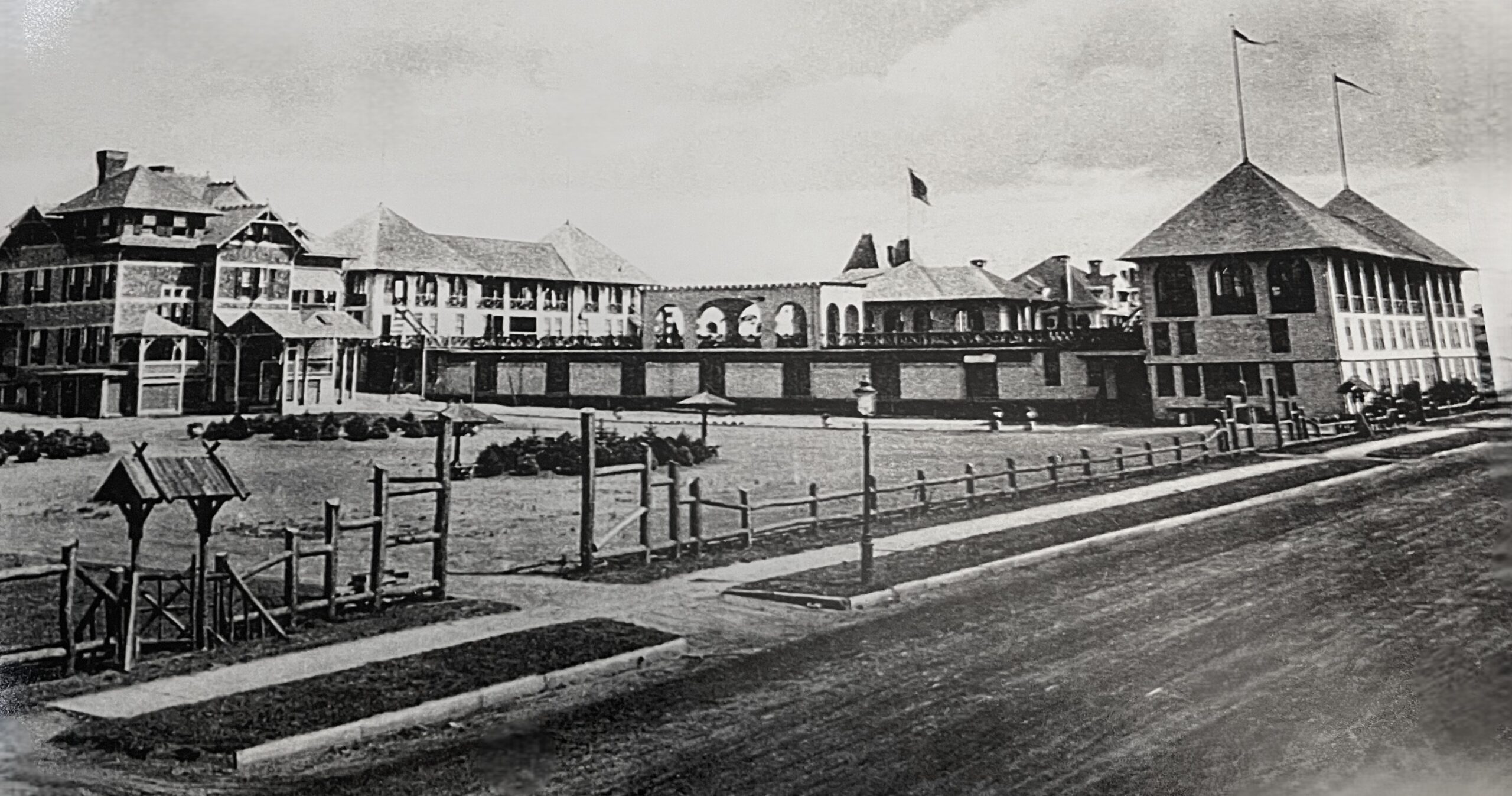
“The Baths at Monmouth Beach” on Ocean Avenue, 1910.
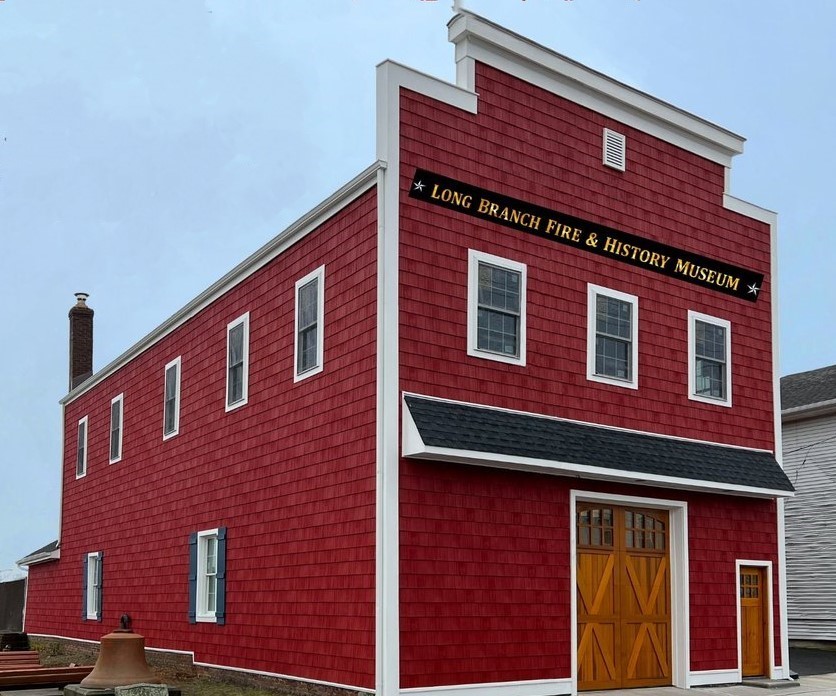
Long Branch Fire & History Museum on Atlantic Avenue, 2024. Located in North Long Branch it’s the old Oliver Byron firehouse — MORE INFO.