Hazard — “Hospital with a Heart”
E.C. Hazard, MD & his Hospital …
This forgotten city healthcare institution — known as the “Hospital with a Heart” – was opened in November 1921 at Washington and Dewey Streets by Dr. Elmer Clarke Hazard (the ultimate “doctor,” the man held MD, PhD, ScD titles). Beginning with 11 beds in an old two-story frame barn (with carpentry renovations by Charles Croxson), by June 1923 the E.C. Hazard Memorial Hospital was incorporated with 50 beds.

Dr. E.C. Hazard, 1949.
For the next “quarter century, the hospital never refused admittance to a patient on financial grounds,” according to the 1949 Long Branch Daily Record. “It never demanded payment in advance and never sued a patient because of inability to pay.” In all its years of operation, Hazard Hospital “never asked about a patient’s origin, race, color or creed. If you were ill — if you were needy — the benevolence of the institution restored you.”
As matter of fact — no other hospital in the whole nation cared more for its patients. This small city hospital once led the entire country (and probably the world) in the percentage of charity patients treated. Hazard Hospital also led the state and the county in charitable care cases for decades. During persistent Great Depression times, more than 90% of patients paid nothing for their treatment. For decades, Dr. Hazard funded the hospital’s work out of his own pocket — with an average annual subsidy of $35,000 from 1920 to 1950.
The foundation of Dr. Hazard’s wealth came via his father, Edward Clarke Hazard, who built a vast grocery empire before his death. Starting in 1883 on old Sickles family farmland on Sycamore Avenue in Shrewsbury, the business grew to have 200+ employees, manufacturing 10,000+ food items and generating $9 million in annual revenue (nearly $350 million today) when Hazard died in February 1905. Once considered “the largest food processing plant in the world,” the family sold the business (including 55 acres) for about $100,000 a year before a February 1914 fire burned the factory.
“The best way to find yourself is to lose yourself in the service of others.”
—Mahatma Gandh
“Known as the poor man’s hospital,” according to the Long Branch Daily Record, the early facility mostly operated as a “general hospital” and with ER and a nursing school. It specialized in pediatrics and obstetrics. At peak operation, just after World War II, the hospital was “crowded to capacity” with a patient-days occupancy rate at 98%.
In September 1956, a $250,000 expansion wing was opened; former heavyweight boxing champs Joe Louis and Rocky Marciano were both on hand for the dedication ceremony. Ferrenz & Taylor were the architects on the three-story brick addition which included 14 patient rooms, an ER, two ORs, and X-ray and exam rooms. At the time, the city’s leading orthopedic surgeon, Dr. Anthony J. Pisani was hospital chief of staff and Florence Murphy was hospital administrator.
Dr. Hazard, born in NYC in December 1879, was highly educated and trained in healthcare, He held three doctoral degrees — a medical degree from Maryland Medical College at Baltimore in May 1904, a doctorate in pharmacy from Columbia University in NYC in 1902 and a final doctorate in Science in 1907. Much-admired citywide, Dr. Hazard “created a place where the poor, suffering, and needy” could go for free healthcare, according to a June 1958 Long Branch Daily Record editorial. “Life is far more valuable than money,” was the good doctor’s healing philosophy.
And MMC
After devoting “his life and fortune” to the hospital, Dr. Hazard died in November 1954 after a long illness. His only son, Edward Hazard, was an expert billiards player and teacher, before his death in February 1975. His brother, Bowdoin Hazard, was the hospital’s administrator for over decade. He died in 1957 after his car was hit a by a train at the Joline Avenue railroad crossing.
In October 1957, the facility changed names becoming the “Doctors’ Memorial Hospital.” Struggling and $150,000 in debt in the wake of Dr. Hazard’s passing – and losing $1,000 a week — the hospital was sold in February 1959 to the Home for the Chronic Sick of Irvington, NJ for $275,000; Joseph Fox, PhD was the executive director. The facility was damaged in a May 1968 fire and Dr. Hazard’s original house was torn down in 1969. The facility ceased all healthcare operations in 1974.
Today, the only hospital left in Long Branch is Monmouth Medical Center on Third Avenue. Founded in 1887, it is part of the RWJ Barnabus Health network. No longer a modest city hospital, MMC is now part of a billion-dollar healthcare conglomerate. It’s also leaving the city going to former Fort Monmouth property in Tinton Falls. With it goes a century-plus of loyalty to the city, compassion for all patients, community interest and involvement, neighborliness and overall good will.

New E.C. Hazard Memorial Hospital sketch proposal, Long Branch Daily Record, January 1954. Ferrenz & Taylor were the architects.
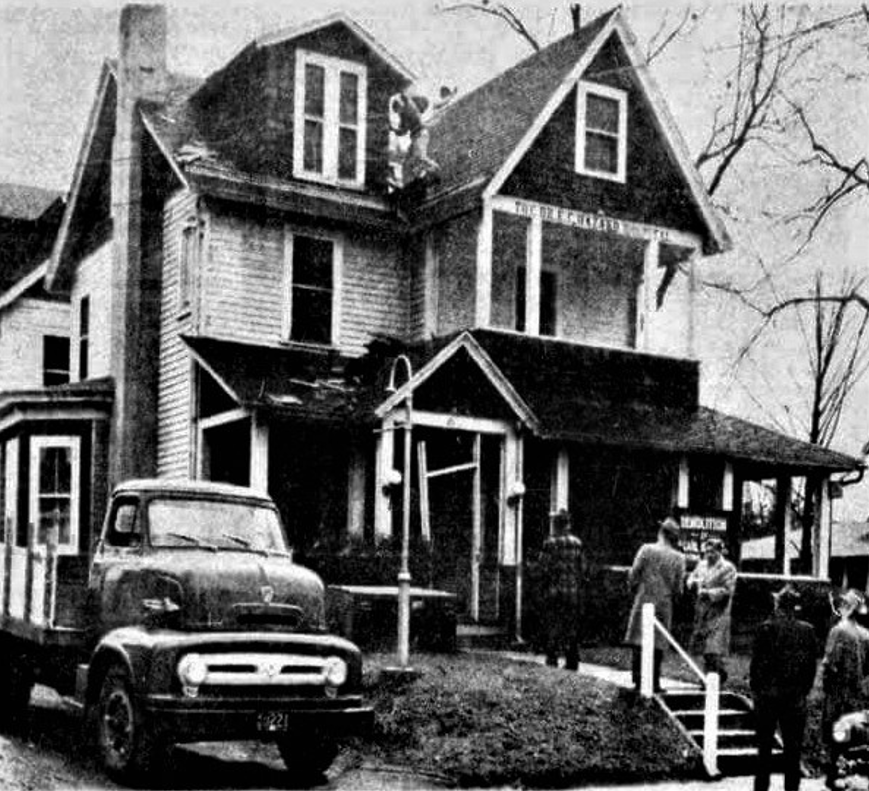
Hazard Hospital, 1954. “The poor man’s hospital,” Long Branch Daily Record.
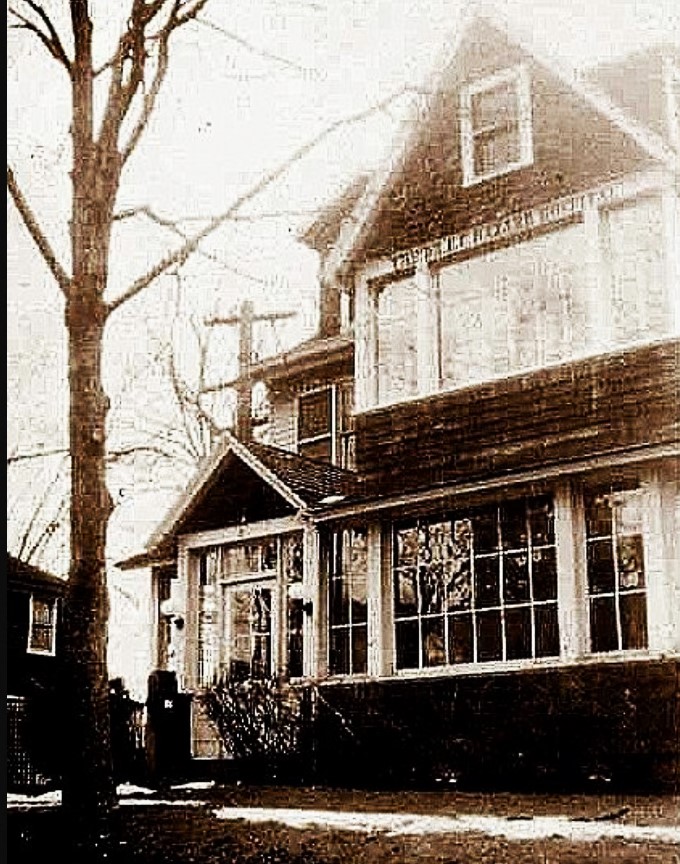
Hazard Hospital, 1950s. Such was the reverence and regard for Dr. Hazard that his improved health details made the front-page of the Long Branch Daily Record in June 1937.
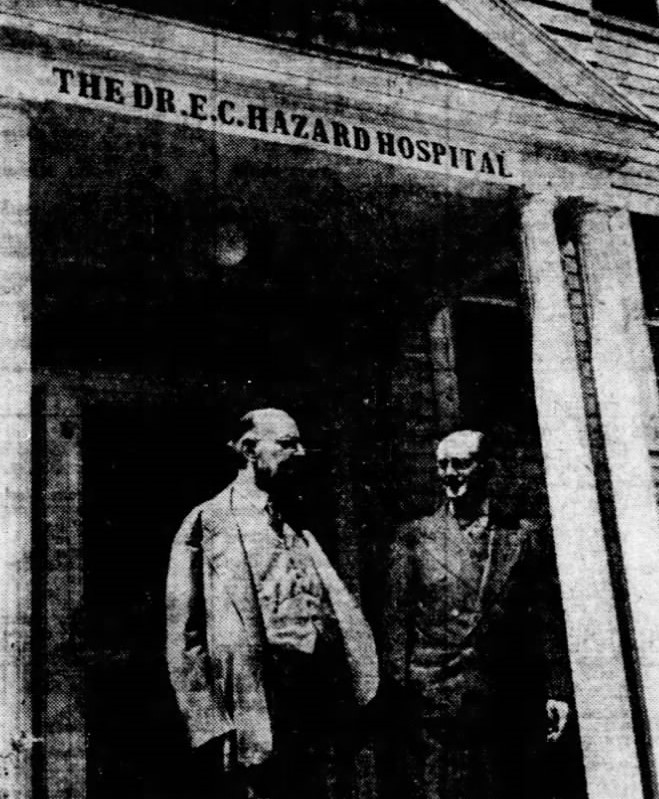
Dr. Hazard (l) and his brother Bowdoin (r) outside the hospital, Long Branch Daily Record, 1948.
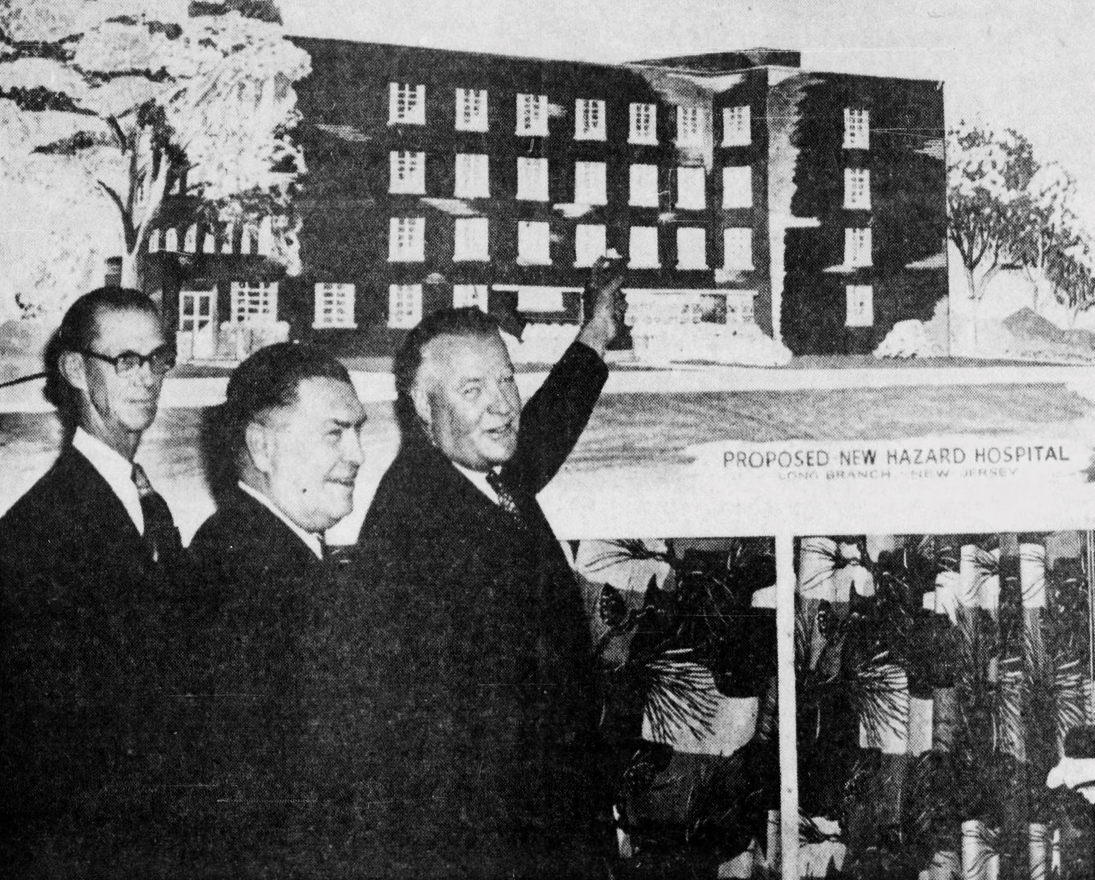
New Hazard Hospital plan, 1953. For 30+ years Long Branch saw Dr. Hazard’s “skill, competence and charity.”
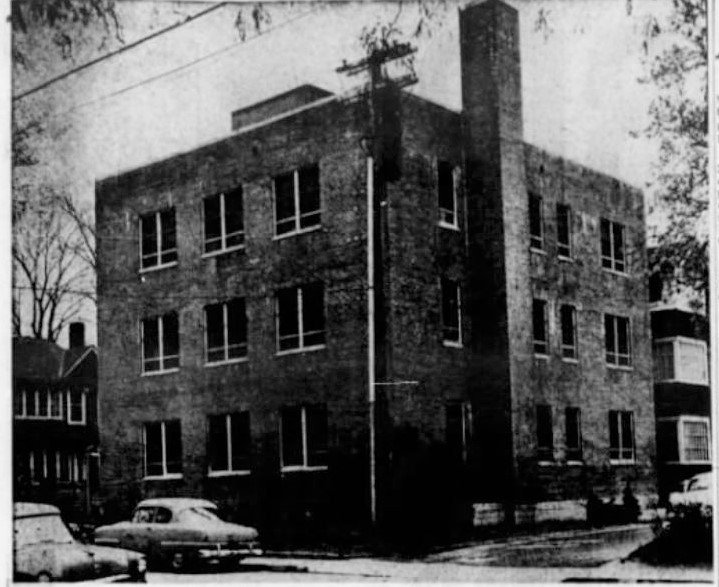
Hazard Memorial Hospital, 1958. When the three-story brick addition opened in September 1956, it included 14 patient rooms, an ER, two ORs, and X-ray and exam rooms. At the time, top orthopedic surgeon Dr. Anthony J. Pisani was hospital chief of staff and Florence Murphy was hospital administrator.

Hazard Hospital, 1950s. In receiving treatment during the Great Depression years, 90% of the patients paid nothing.
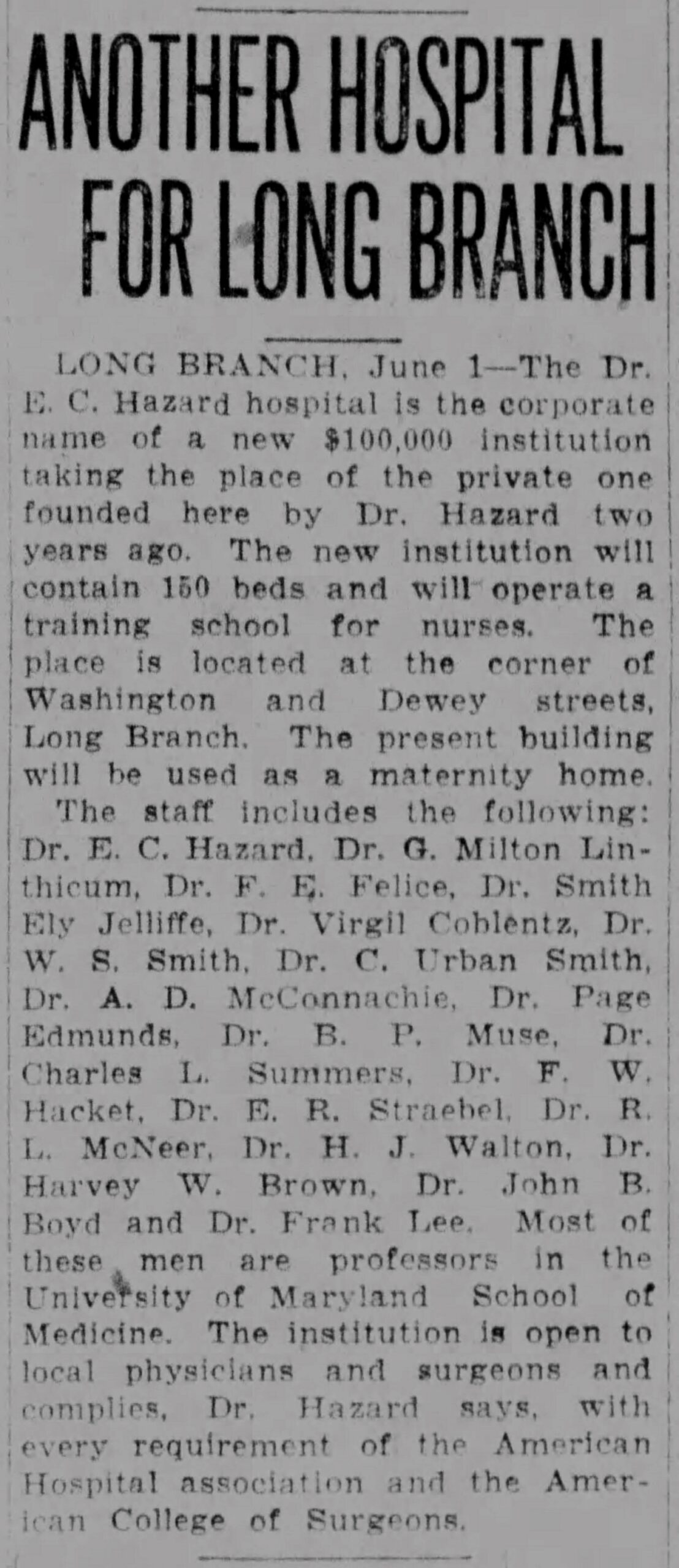
Hazard Hospital story. Asbury Park Press, June 1923.
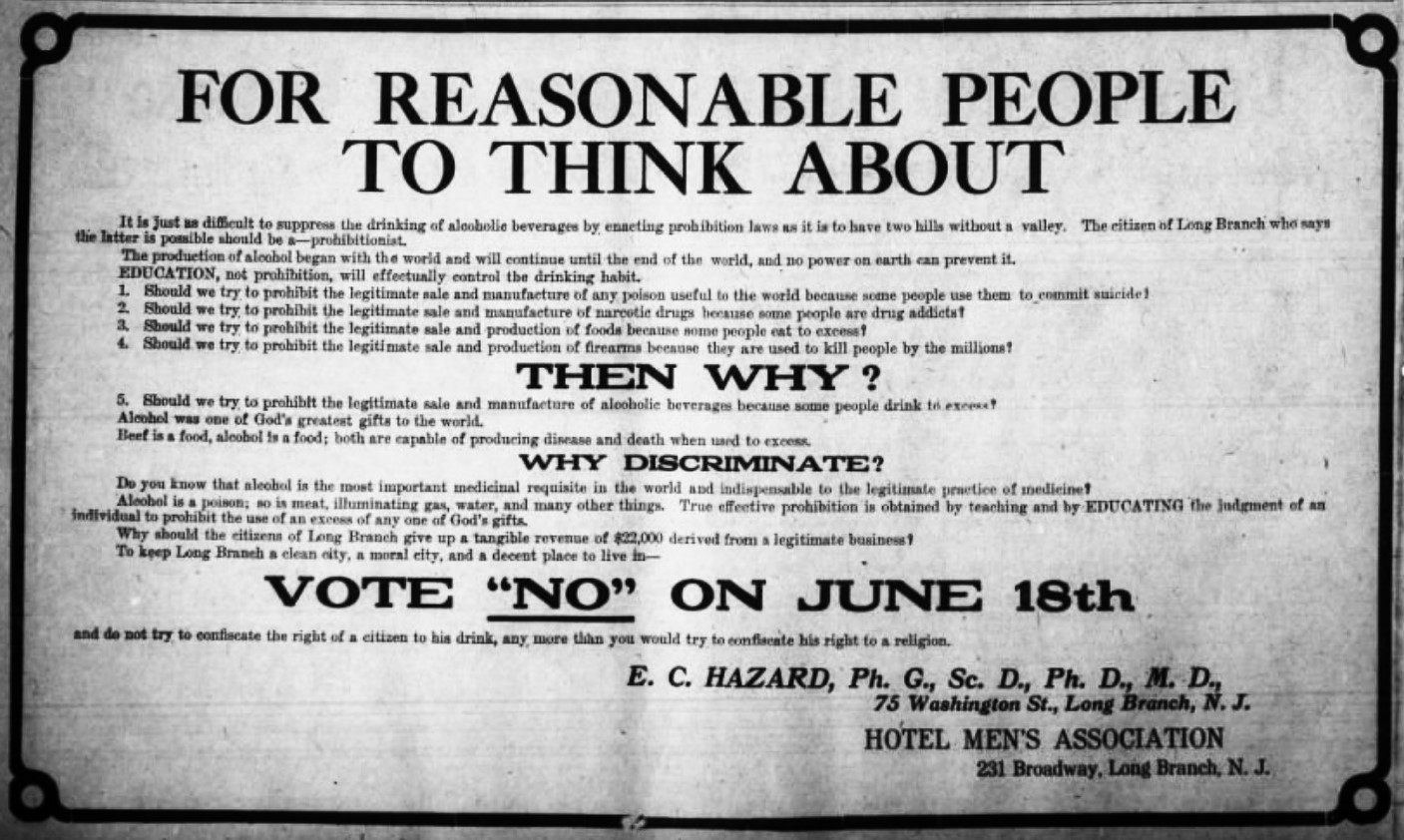
Hazard a Drink? — The good doctor was against the “Prohibition” movement paying for this Long Branch Daily Record ad, June 1918. The city voted to “stay wet’ by 1,711 to 625.

The Other Hospital — Monmouth Medical Center on Second Avenue, 1966 — MORE INFO.