Grandpa Kelly’s Seashore Hotel
Long Branch — in addition to its myriad other glories — might well have been called “Hotel City” during its heyday times. Over the course of my digital research to date I have identified more than 150 hotels/motels/boarding houses/inns based in town — which isn’t close to a complete list.
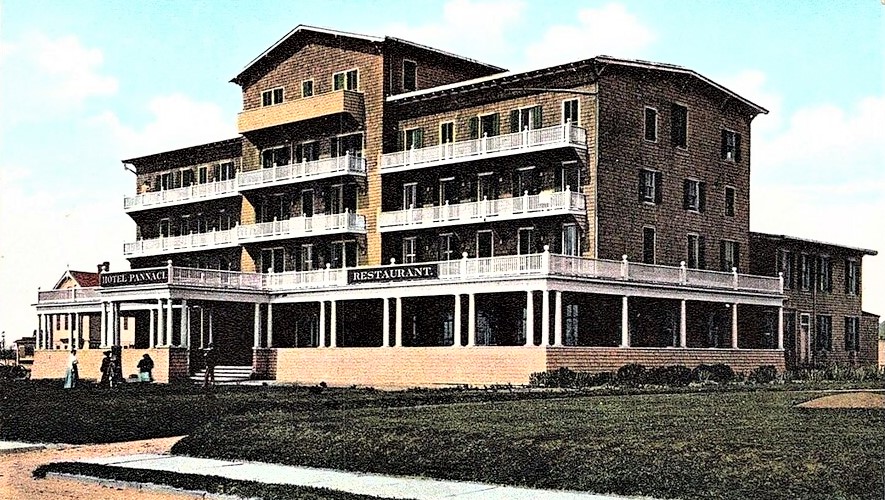
Pannaci Hotel.
Among the best and biggest was the Pannaci Hotel. For half a century it sat neatly along Long Branch’s famous bluffs — boasting a grand view of the Atlantic Ocean. I recently found that for a single summer season in 1915 my grandfather leased this oceanfront hotel. The discovery has added meaning as I recently became a grandfather myself — to a beautiful baby girl with the Kelly name.
Pannaci’s Place
Gernando Pannaci first acquired the hotel at Ocean and North Bath Avenues in November 1898 paying about $42,000. Anthony Iauch opened the original hotel there in 1868. Pannaci (Italian-born, he spoke four languages) was deeply devoted to Long Branch and its drive to become a city (he was a member of powerful Board of Trade).
He proved it too — making constant upgrades to his large oceanfront hotel. Able to accommodate up to 150 guests, the hotel also had a large restaurant. It was on the hotel’s elaborate outside piazza where perhaps the first-ever outdoor meal was served in Spring 1901. Luncheon on this broad porch with “cool breezes and awnings for sun protection” was a guest preference. Tennis, a regular orchestra and dancing were also on the bill.
The Pannaci was remembered as “the first summer hotel to open and the last to close” and was considered the city’s “convention hotel.” In fact, the contract to build the last Long Branch Pier was awarded at the Pannaci Hotel in June 1910 ($1.4 million for Sam Rosoff)
His brother, Edward, who convinced him to come to America, ran another “Hotel Pannaci” in Sea Bright. To sweetened the local history connection, Gernando was the grandfather of the late George Moss, Jr., the widely-admired local historian and author. Gernando — “a born hotel man” — died in April 1923 and his wife ran the hotel for a while. Hotel and property were sold at sheriff’s auction in 1932 (for about $16,500) and the hotel was finally torn down in November 1934.
“The life of the dead is placed in the memory of the living.” —Cicero
The Kelly Try
My paternal grandfather, Augustine Charles Kelly and business partner, Adolph V. Seidler, were hotel-keepers. Summer 1915 was only season Pannaci leased the property, which Seilder & Kelly renamed as the “Hotel Breakers.” A big mistake! Why abandon the hotel’s existing brand loyalty and reputation?
The men claimed the Hotel Nassau on Long Beach, NY (a swanky 400-room boardwalk hotel on Long Island) for their previous hostelry work experience and pledged “New Ideas, New Management, New Life” at Long Branch. The Brooklyn Daily Eagle (grandpa’s hometown newspaper) upped the pressure with a big spread on the upcoming 1915 NJ Shore summer season — the lead was: “Long Branch Expects Best Season in Years” and grandpa’s effort was cited early in the story. With Pannaci’s blessing the men began with a huge Memorial Day weekend bash and invited every notable city person. All summer long they never stopped advertising in the local daily newspaper.
Regrettably the endeavor lasted but one season — by October 1915 the partnership was in bankruptcy court. Still, I must admire my grandfather’s start-out gusto. “I believe in the future of Long Branch — I’m convinced of it,” he told the Long Branch Daily Record’s “Man About Town” columnist early that summer in July 1915. “I’m not painting roses. There’s a bright future ahead for all — if we only embrace the opportunity.” I trust that my grandfather had the energy for the hotel effort — being a bachelor just under age 30. He was about a year from marrying my grandmother and 3 years from the birth of my father, Charles Ward Kelly.
Even so, by 1915 Long Branch was in transition — a resort town moving from elite national prominence to a more modest, middle-class coastal city. Day-trippers and summer visitors came by rail or car and didn’t need a hotel room. Entertainment was scarce too. Not until the early 1920s did the Long Branch pier/boardwalk begin to have impact.
Also the partners were entering ratified territory. Among the Long Branch lodging landmarks were the: Ocean Hotel, Stetson House hotel, West End Hotel, Howland Hotel, Mansion House hotel, Hollywood Hotel, Price’s Hotel, United States Hotel, Elberon Hotel, Takanassee Hotel, Brighton Hotel, Scarboro Hotel and Atlantic Hotel and many others. Moreover, prime-time Long Branch hotel operators were men of power and influence — among them Cooper, Howland, Price, Leland, Laird, and Hildreth. They were city mayors and commissioners, leaders in local commerce and pioneers in the hospitality business.
The first hotel at Long Branch was opened before the 1776 Revolutionary War. “Fish Tavern” — located at Ocean and Cooper Avenues — was a simple two-story building offering food and lodging. Today, Long Branch has three hotels — the Ocean Place Hotel, The Bungalow Hotel and The Wave.
Getting Gus?
Despite my inquisitive journalistic nature I could never get my father to talk much about his own father. Called “Gus” — who he was and what he did wasn’t discussed. Despite the info vacuum I sensed a resentment and maybe pity for him. Mostly channeled through his mother (Alice Ward Kelly) who my dad revered as his “guiding light” in his life. Oddly, my grandma would “expire” by the beach too — dying at my father’s Monmouth Beach home in Summer 1955.
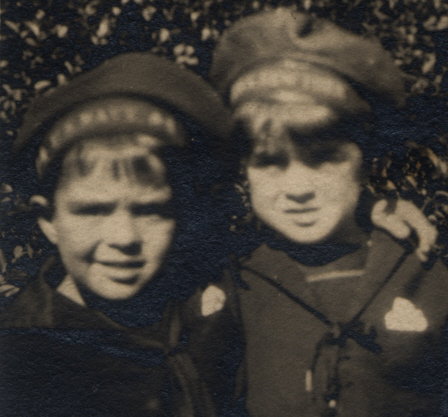
My dad (l), 1920s.
Gus worked in the hospitality business and rose to management positions at several high-end East Coast hotels. He evidently rebounded from Long Branch — my Dad explained that the family lived very well during the Roaring ’20s. My grandpa also did tours at Holland House, a posh Fifth Avenue hotel, and the Briarcliff Manor, which overlooked the magnificent Hudson Palisades. The family has or had trinket reminders from these places.
Another Gus work place may have been the celebrated Willard Hotel in Washington, DC. Located on Pennsylvania Avenue dating to the 1840s, it was famous for hosting every US president in its time. I have no hard facts as to, if and when, the Willard times occurred. It follows though. My father told me that his mother was friendly with Thomas Marshall, a Willard Hotel resident during his two terms as Woodrow Wilson’s vice president (1913-1921). The son of an Indiana physician, Marshall died at The Willard in 1925.
Later on my grandpa would battle alcoholism, separate from his family and die alone. I’m uncertain about the date. I don’t even know if he lived to see his son earn his medical degree in 1943. Kelly history paints Gus as either a drunken weakling who abandoned his family or an affable but over-pressured guy who died of a legitimate illness. Perhaps, my Dad hinted, from tuberculosis? A serious contagious bacterial infection, TB was the leading cause of US deaths for most of the 20th Century.
The truth about Gus was probably somewhere in between. We’ll never know.
More Info:
• Long Branch Hotels: Great Views — HERE.
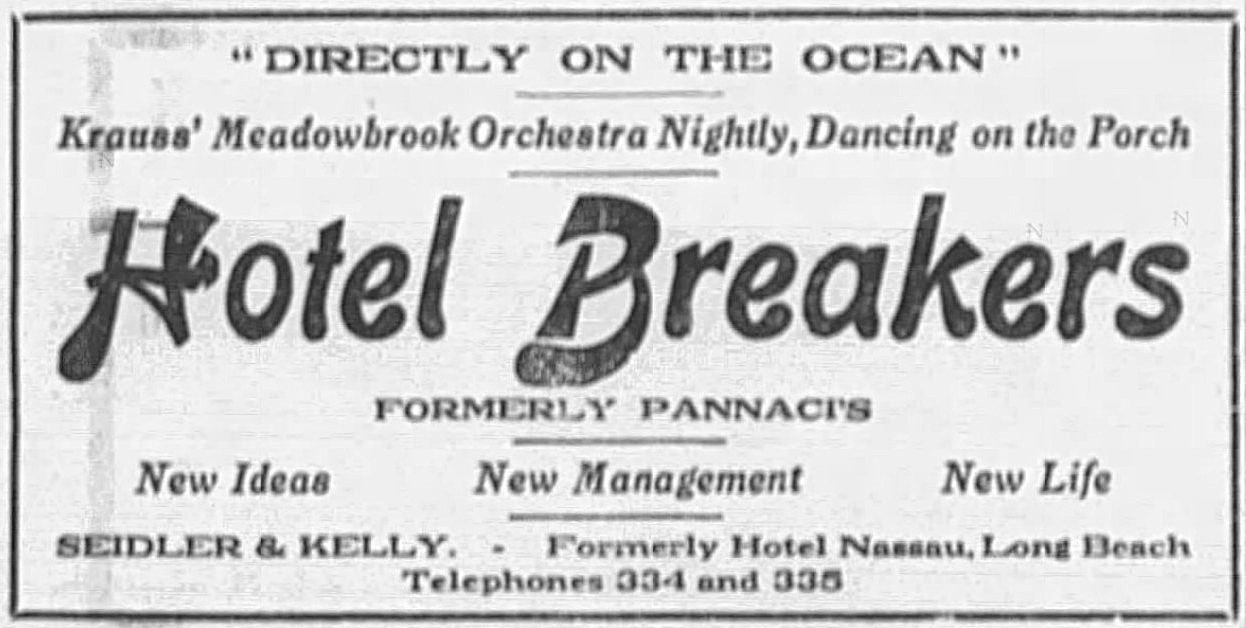
Summer Dreams — “Hotel Breakers” ad, Long Branch Daily Record, June 1915.
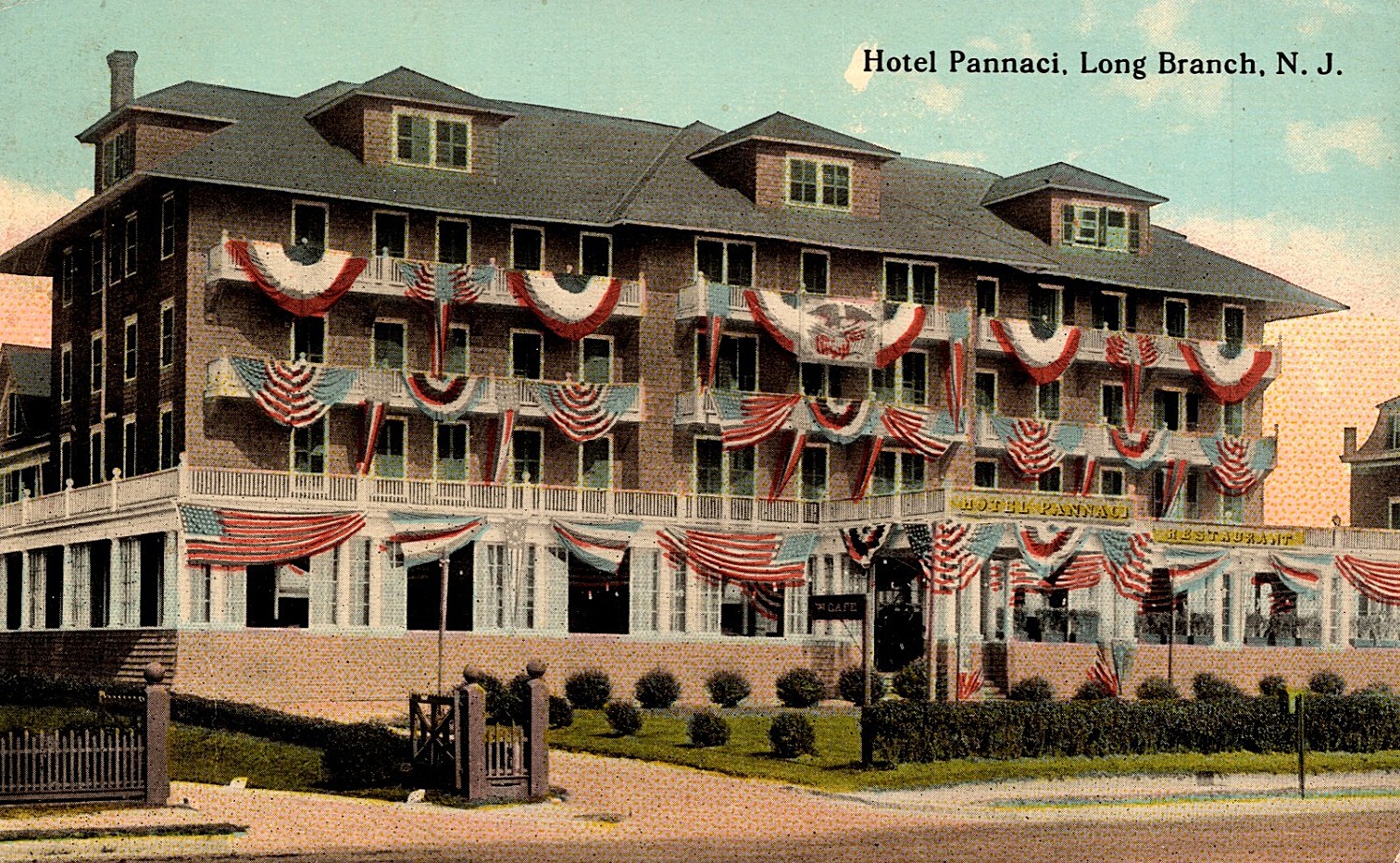
Hotel Pannaci on Ocean Avenue, 1910.
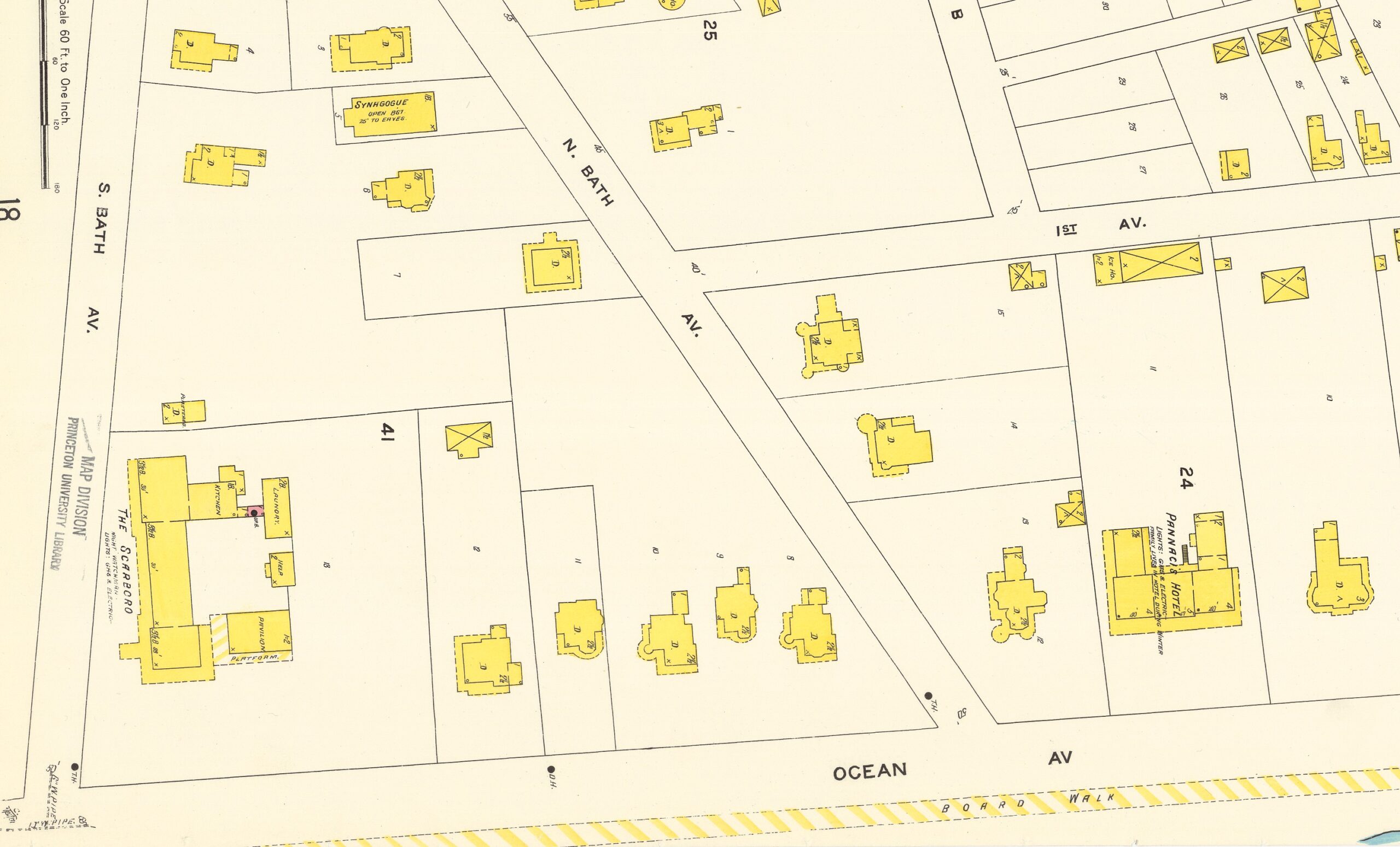
Pannaci Hotel (r) on the Long Branch oceanfront, Sanborn Map 1907.
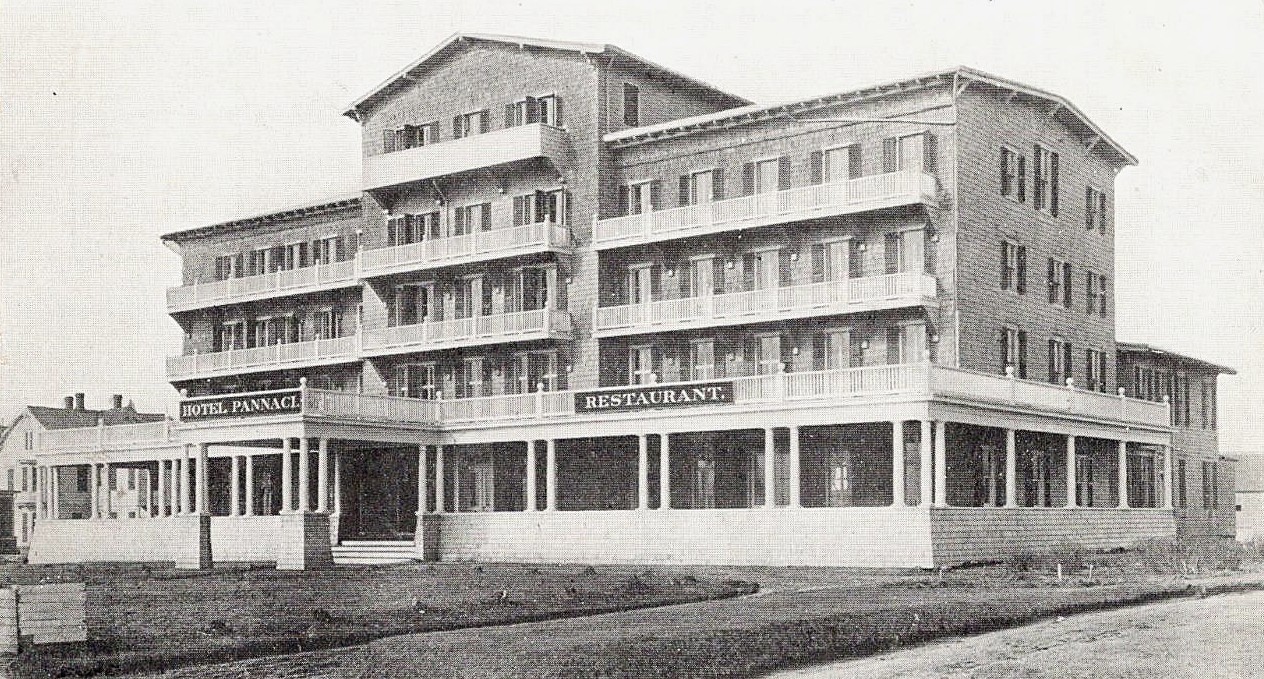
Hotel Pannaci, 1904.
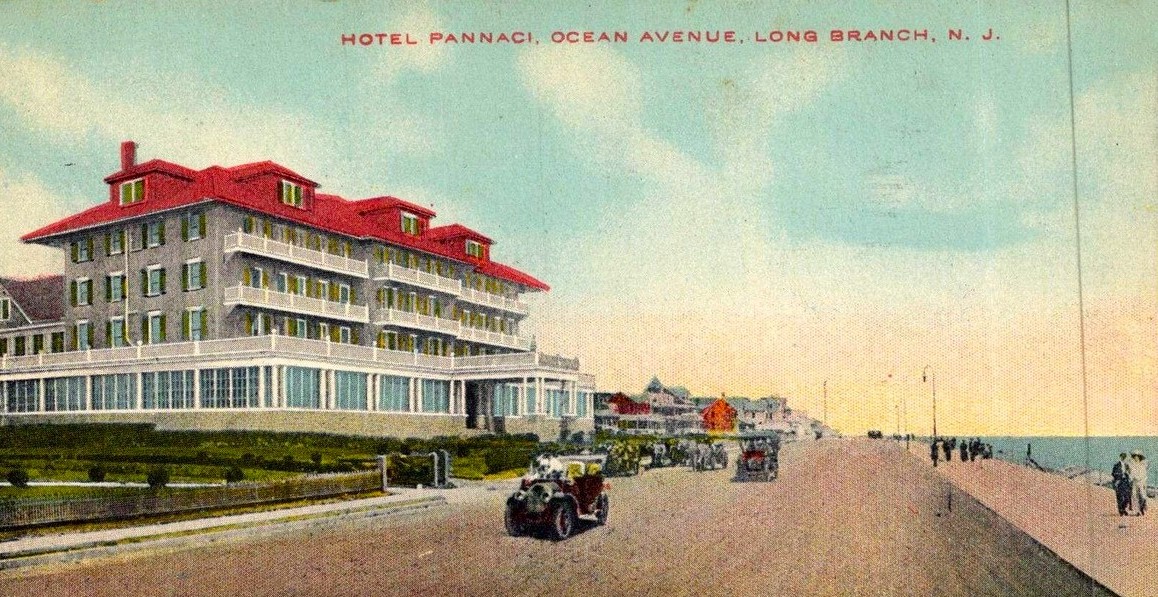
Hotel Pannaci, 1914.
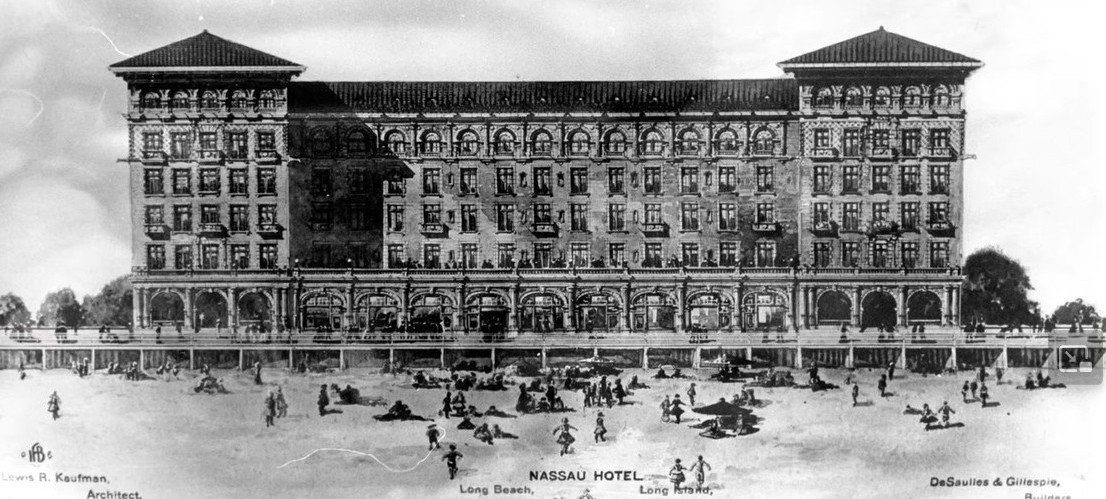
Hotel Nassau on Long Beach, NY. Opened in 1909, the massive Long Island hotel had 400 rooms in its prime.
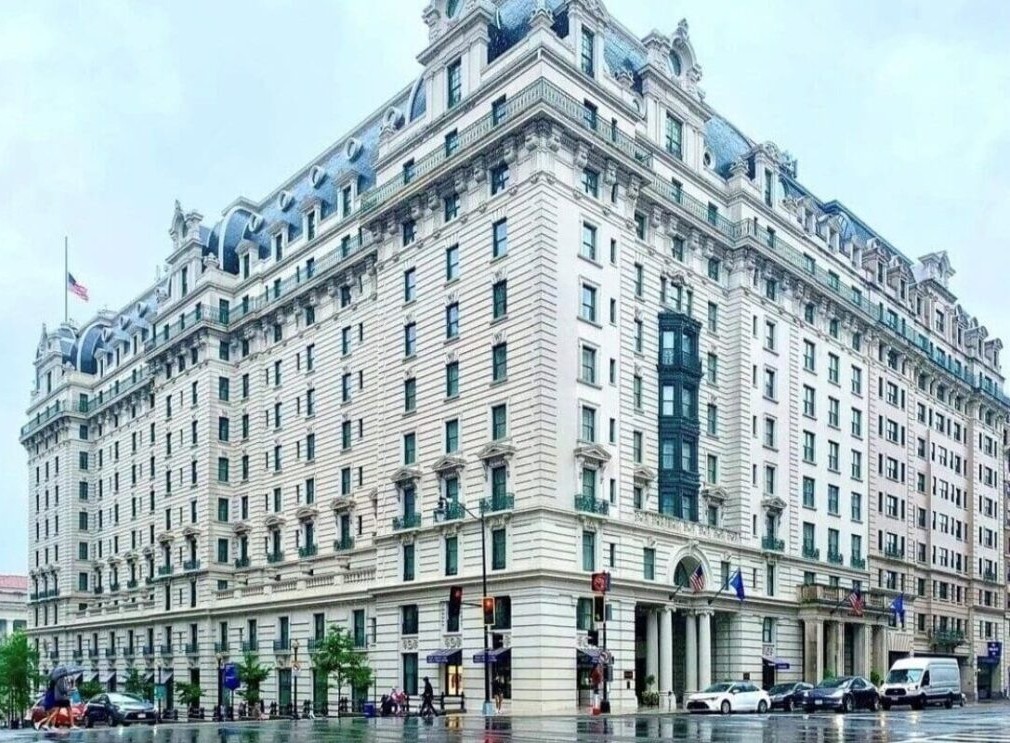
Willard Hotel on Pennsylvania Avenue in Washington, DC, 2024. Opened in the 1840s.
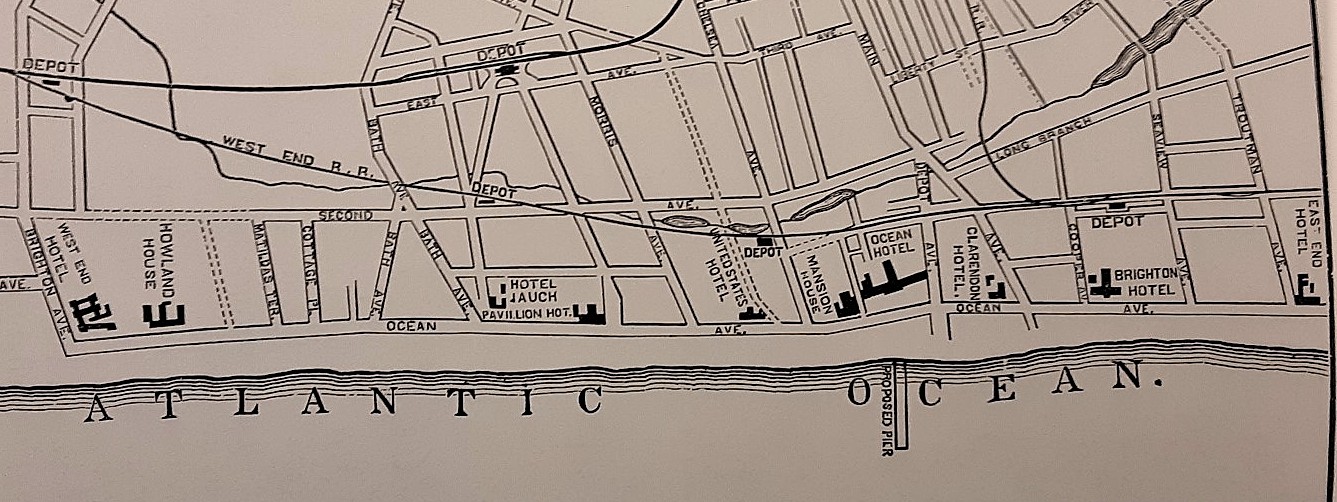
Pre-Pannaci — West End Hotel (l) to East End Hotel (r) along the Long Branch coast, 1879 map.